Where are we going? Are we getting there? Can we afford it? What could stop us? How do we know?Strategy, improvement, finance, risk, assurance and governance, in one model at last.
Every trust is already answering the six questions, in a strategy document, an improvement plan, a budget workbook, a risk register, evidence folders for the auditors and a board pack that takes a week to put together. Each is fine. None of them connects to the others, so the board sees fragments, the executive joins them by hand, and the schools see something different again.
Trustees, executives and headteachers looking at the same picture. That is the change.
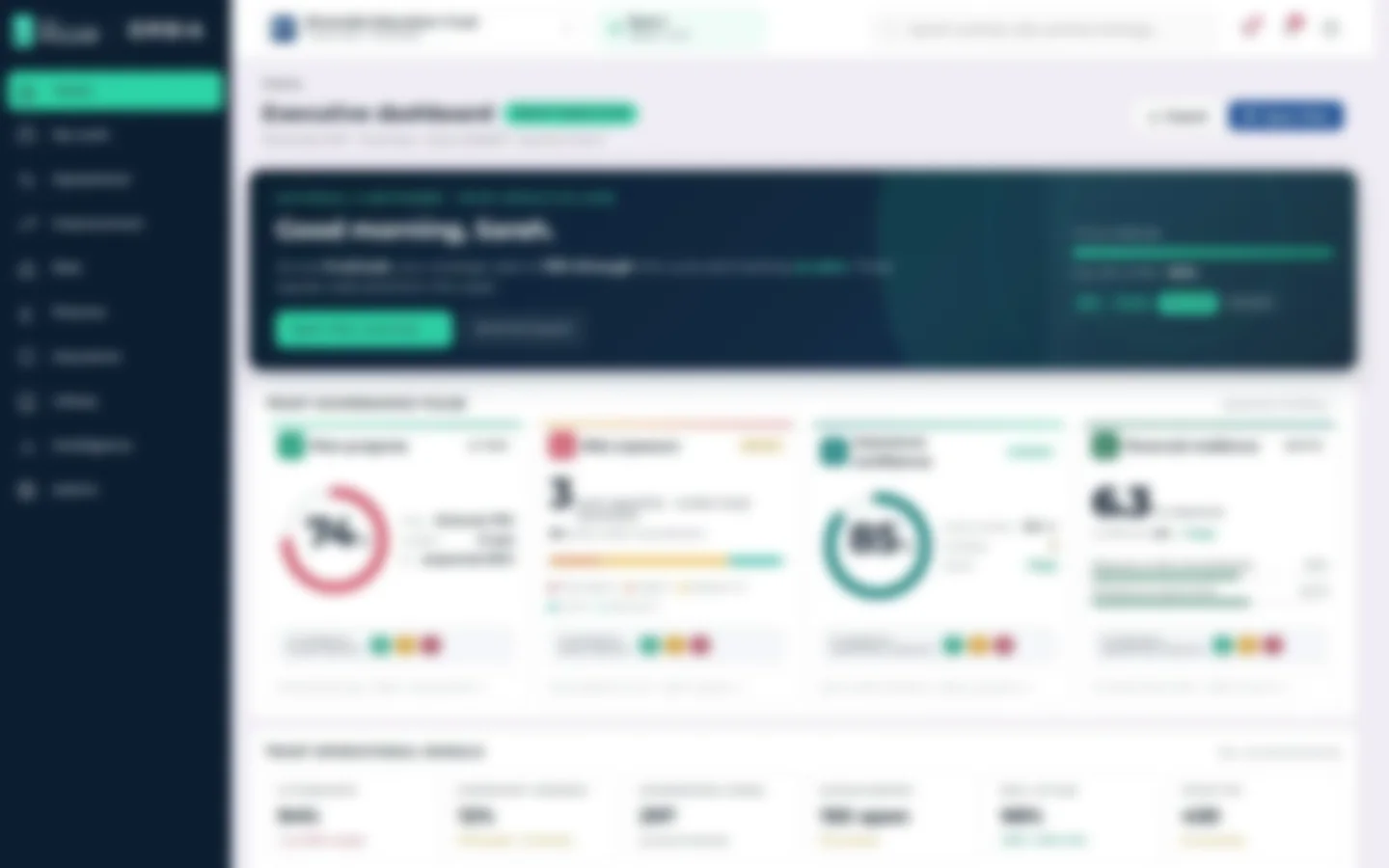
Strategy sets the outcomes. The improvement plans serve them. The money is read against the plans. The risks are tied to the plans. The assurance is tied to the risks and the controls. And governance sees all of it as one live picture, for the trust and for every school in it.
Built from the data your systems already hold, not rebuilt by hand. Where something is not evidenced, ORSIA says so, never a made-up rating.
The same model, read by every role at its own altitude, so the head, the executive and the board are looking at the same thing. Here is what it holds, question by question.
Strategic outcomes sit at the top of the model, in the trust’s own words, with stakeholder experience beside them. These are first-person statements of what success feels like for pupils, parents and carers, staff, partners and governors, held for the trust and for every school. Every plan, risk, control and action links to the outcome or the experience it serves, keeping attention on what the trust exists to achieve.
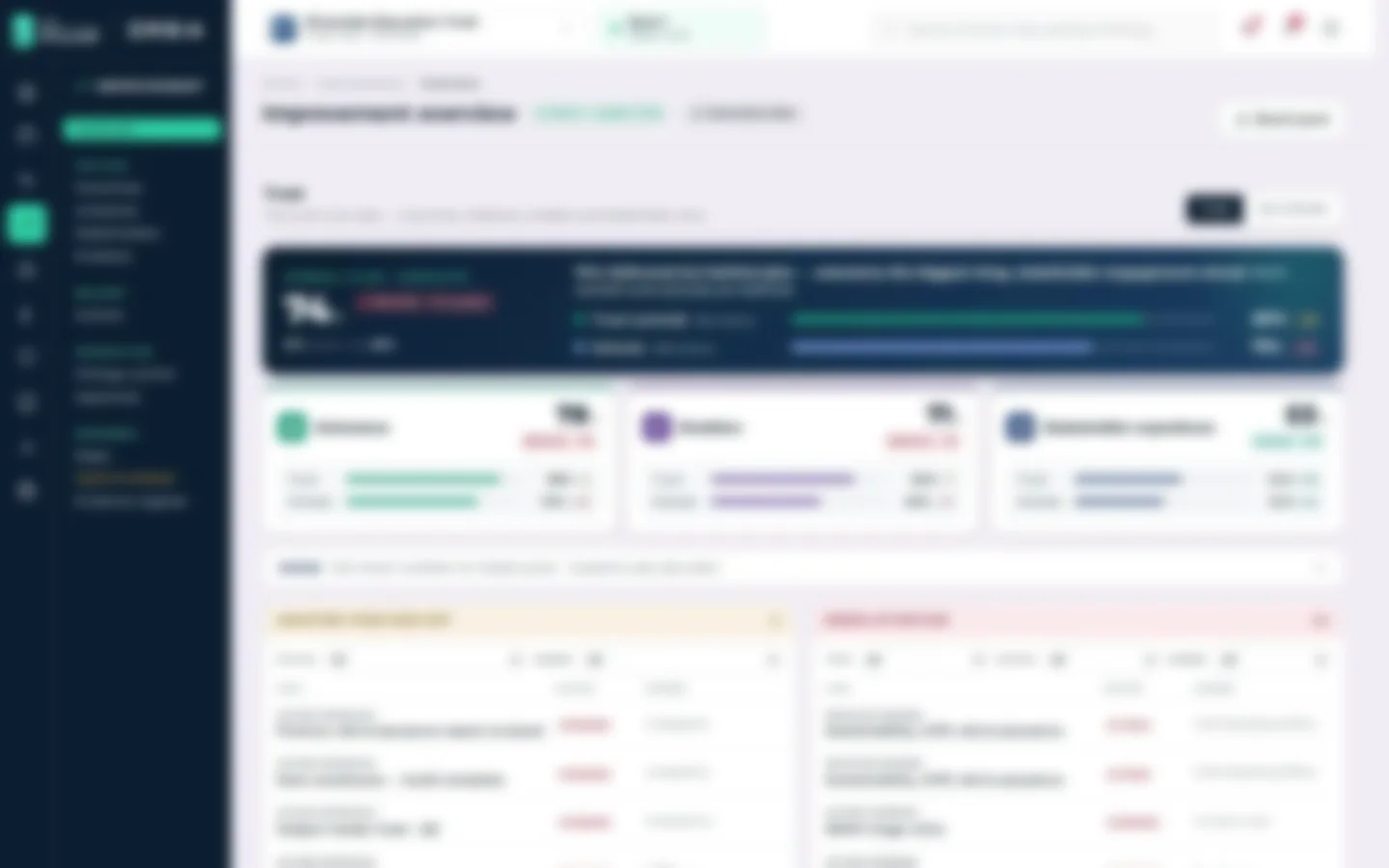
Live improvement plans for the trust and every school connect priorities, actions, enablers, stakeholder experiences and evidence, with school priorities rolling up to the trust. Progress is visible as the work happens, showing what has been achieved, what is on track, where attention is needed and why.
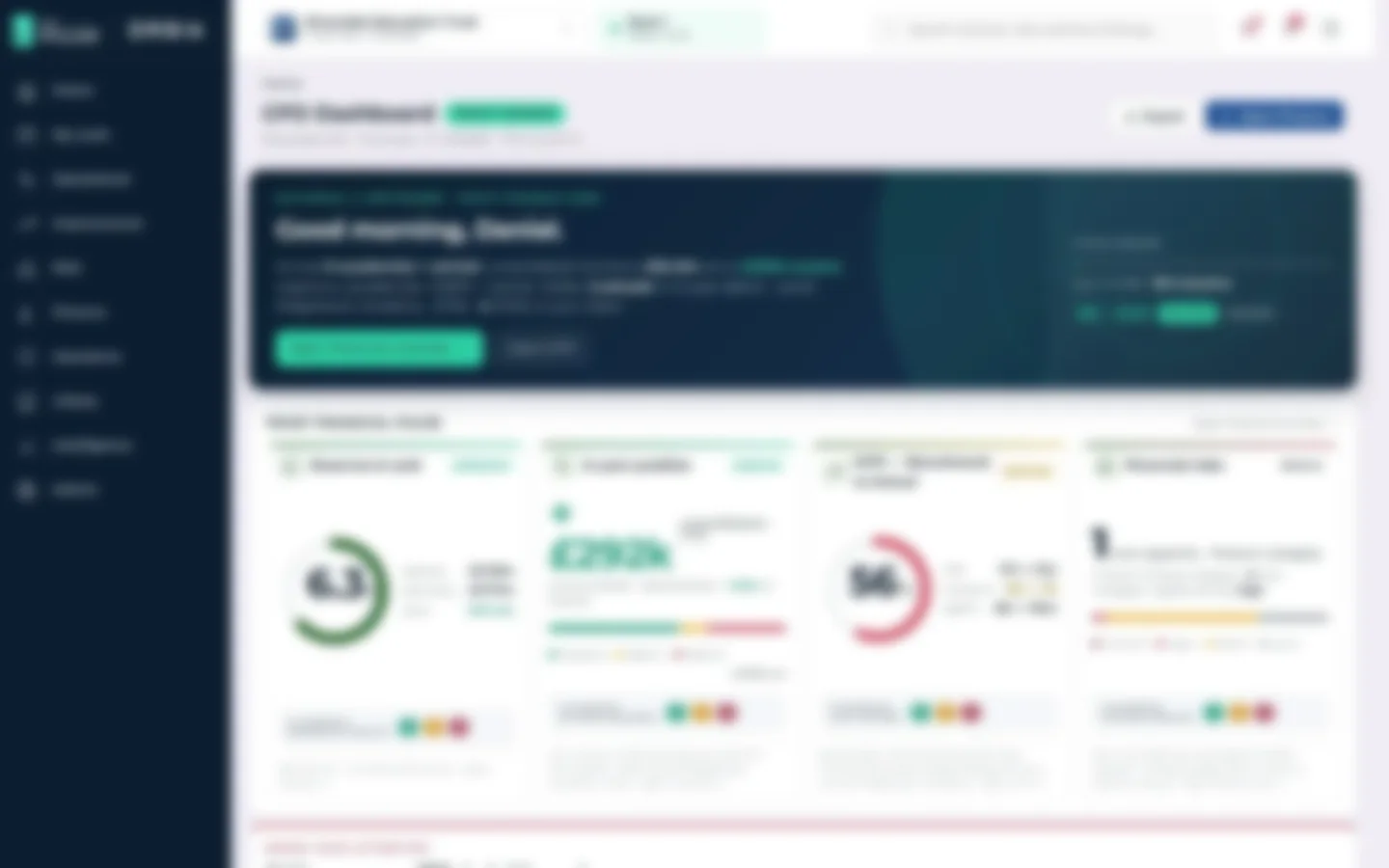
Plans, forecasts and reserves, read from the systems the trust already uses, show whether it can afford to deliver its priorities, now and over time. Curriculum, staffing and money are read together from the trust’s own figures, on one definition for every school, with the assumptions and financial tolerances made clear. Finance is connected to delivery and risk, so leaders can see the financial position, and what it means for the plan.
Strategic risks are considered against the trust's appetite, with key risk indicators and operational signals monitored against agreed tolerances. ORSIA connects risk to what is happening across every school. Emerging issues are visible early, giving the right people time to act.
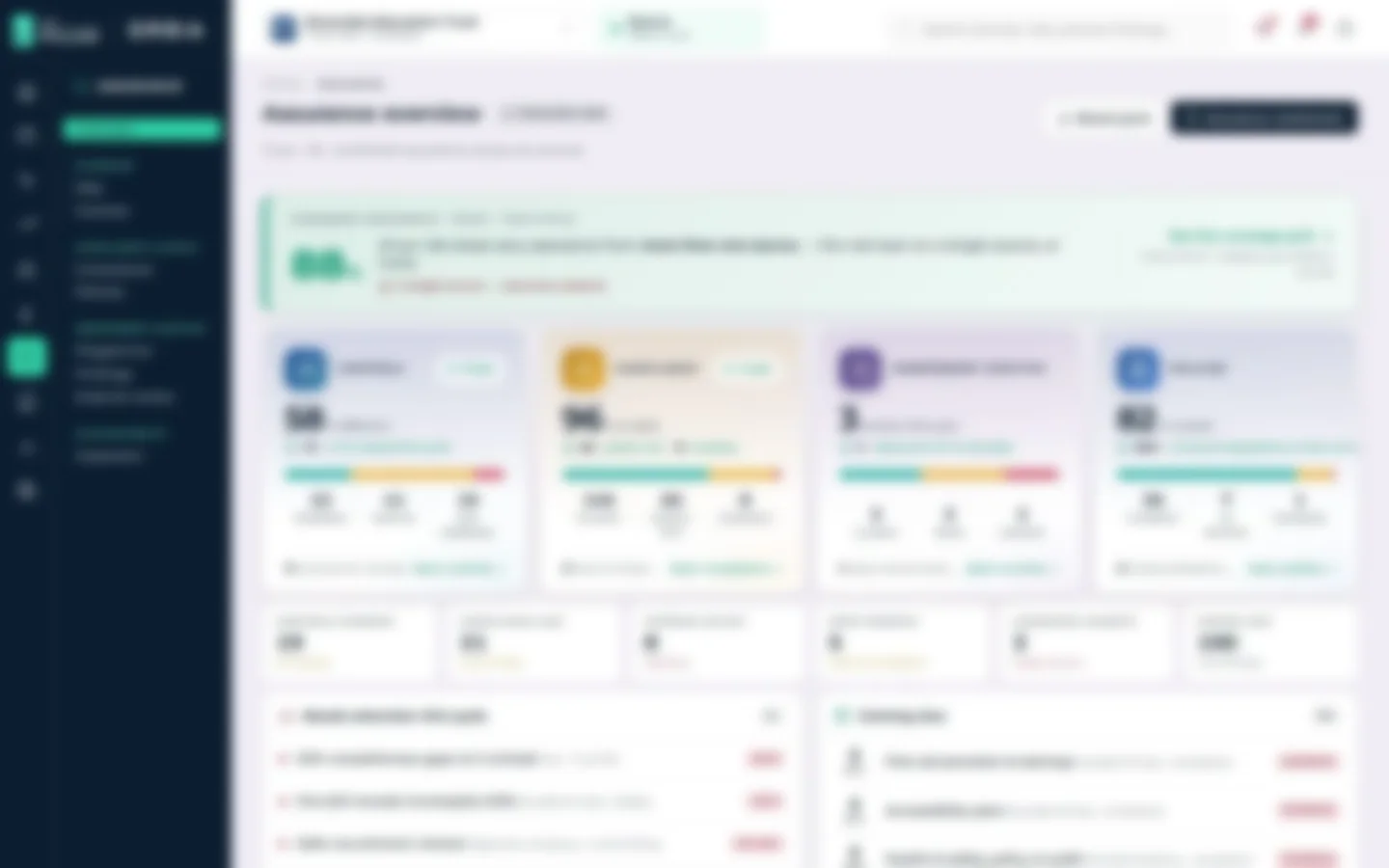
Controls have named owners, due dates and evidence, with assurance gathered as the work is done, not assembled afterwards. Safeguarding, SEND, compliance, policies, internal scrutiny and other sources of assurance sit within the same connected picture. The trust can see where assurance is strong, where further evidence is needed and where attention should be focused.
Responsibilities, decisions, approvals and sign-offs are clear, with actions and decisions recorded in the platform. Governance cycles and due dates keep activity moving, while the connected picture gives boards and committees the information they need. Papers are generated from the live picture, editable where judgement belongs, versioned and approved in ORSIA.
Four of the six sit behind a duty the Academy Trust Handbook places on the board. The risk register and the board’s ultimate oversight of it. A programme of internal scrutiny over financial and non-financial controls. Curriculum and financial planning read together. The accounting officer’s annual statement on regularity. ORSIA does not make a trust compliant, and no platform can. It makes the answers available.

Every trust sets outcomes for its pupils. ORSIA holds those outcomes at the top of the model, links every plan, risk, control and action to the outcome it serves, and reports movement against them, so the board's attention stays on what the trust exists to do.
Every pupil, every phase, viewed against trust targets and the national picture.
Attendance, suspensions and the pupils most likely to fall out of view. How pupils with SEND fare against their peers, and what families say alongside what the numbers show, so a gap is seen rather than lost in an average.
Safeguarding, pupil voice and the culture of every school, with the early warning signs picked up before they show in the numbers.
Where pupils go next, and what that says about the curriculum and support the trust gave them.
Finances, operations, people and governance strong enough to absorb a shock and keep delivering for the next cohort, and the one after.
Outcomes are the trust's own, in its own words. ORSIA does not impose a framework. It makes the one you have visible.
Nothing is re-keyed and nothing is replaced. ORSIA Connect reads what your trust already holds, and then the platform does the work that no MIS, ledger or spreadsheet can. It connects it, tests it against what the trust has agreed, and turns it into a live, assured picture.
One way, read-only, every school and the trust: your MIS, finance ledger, HR system and single central record, assessment and your existing risk register. Your source systems stay exactly as they are, and nothing is ever written back.
The engine reconciles every feed across every school, reads it against the thresholds, appetite and limits your board has set, and links each risk to its control, its action, its evidence and its place in the improvement plan, joined to the work your teams do in the platform every day.
A single live view read by every role at its own altitude (head, executive, committee, board), and the early warnings, the decisions and the papers that follow from it, versioned on every run and approved in the platform.
Not a mirror of your systems. The layer above them.
What could stop us, answered on a trustee's phone.
A school head raises a high risk. It is assessed against the trust’s appetite and escalation rules, and it escalates. A trustee is notified by a push notification, taps through to a single escalation brief and acknowledges it, logged as audit evidence. The phone carries the notification and the acknowledgement. The risk itself is managed in the platform, which stays desktop-only.
High risk escalated to the trust
Riverside Academy raised a site‑security risk (GP‑R‑14) and escalated it for trust review. Open to read the details.
High · Trust reviewRisk escalation approved
the COO approved the escalation from Riverside Academy.
Confirm it's you to view the escalated risk.
Thanks, your acknowledgement is now logged against this risk.
Four stages, with the people who built it alongside you the whole way. Nothing to replace, and nothing written back.
We agree the scope and the success criteria, carry out the Capability & Data Readiness Assessment, and you name your ORSIA lead, ideally a member of the trust executive, and the team who will work with us.
ORSIA Connect links to your MIS, finance ledger and HR system, read-only, and loads your existing risk register, so the platform fills with your trust's own data. The gaps identified in the readiness assessment are worked through as part of set-up.
This is where it comes alive. Your teams move their real work into the platform, the improvement plans, the risk register, the actions and the evidence, and the connections form as they do. Risks link to their controls, actions to the outcomes they serve, and each school's priorities roll up to the trust's. The first board and committee papers generate themselves, and we check every part of the picture with you against what you know to be true.
The board sees its first live view and ratifies the approach. Then a short period of hypercare, which means exactly what it sounds like. We take particular care of you while you get up and running, with a named contact, quick fixes and weekly check-ins until the new way of working is simply the way you work.
Your MIS, ledger and HR system stay exactly as they are. ORSIA is the layer above the record.
ORSIA Connect reads one way. Your source systems remain the single point of truth.
A security briefing, procurement note, DPIA and data-processing agreement, ready for the people who will ask.
What we ask of you: an ORSIA lead with the seniority to get things done, some of your team's time, access to your data so we can connect it, and a willingness to move the work out of Word and Excel and into the platform. That is the whole list.

ORSIA is not a reporting layer laid over the old way of working. The improvement plan stops being a Word document, the risk register stops being a spreadsheet, and the board pack stops being something someone pulls together the week before the meeting. Your teams do the work in the platform, once, and everything above it is generated from that. Papers you can still amend where judgement is needed, but never have to assemble. It is a change, and we say so up front, because it is also where the time comes back.
| Today | In ORSIA |
|---|---|
| Board and committee papers assembled by hand over the weeks before, chased from every school and function, and circulated seven days out | Papers generated from the live picture, amended where judgement is needed, then versioned and approved in the platform |
| A school escalates by email, someone replies, and the only record that anyone saw it is in an inbox | The escalation reaches the trustee whose responsibility it is, and their acknowledgement is recorded against the risk, with the time |
| Risk appetite agreed once and filed | Appetite and tolerances applied to every risk, school by school, with active, tolerated and emerging risks managed in one register and breaches surfaced as they happen |
| Minutes as the only record of a decision | Decisions, approvals and sign-offs recorded in the audit log, with who and when |
| Governance calendar kept in someone's head or a spreadsheet | Cycles, terms and due dates driving the work, with the chase built in |
| Today | In ORSIA |
|---|---|
| Risk register in a spreadsheet, reviewed before the committee | Each risk owned, rated inherent and residual, and connected to the controls, actions and evidence behind it, so its position moves as the work does rather than being written up before a meeting |
| Single central record checked in a scramble before inspection | The SCR check a scheduled control with a named owner and evidence attached as it operates |
| Policies in a shared drive, and who has adopted which version is anyone's guess | A policy repository with adoption tracked school by school, acknowledgement evidenced person by person against whoever each policy requires, and review dates that chase themselves |
| Key risk indicators reported termly, from a spreadsheet | KRIs read from the data against board-agreed tolerances, warning before they breach |
| Internal scrutiny planned by email between the trust and the reviewer | The scrutiny plan, findings and actions held in one place, evidence linked to controls |
| Today | In ORSIA |
|---|---|
| Improvement plan in a Word document, refreshed each term | A live plan of priorities, actions, enablers and evidence, updated as the work happens |
| Actions chased by email and remembered in meetings | Actions owned, dated and evidenced, with the chase built in |
| Evidence in folders, photos and inboxes | An evidence register, each item linked to the control, action or outcome it supports |
| School and trust plans that do not talk to each other | One common language, so a school's priority rolls up to the trust's and the outcome it serves |
| Progress reported by narrative | Progress visible without a progress report, showing delivered, behind, at risk, and why |
| Today | In ORSIA |
|---|---|
| ICFP done once a year in a workbook | Curriculum, staffing and money derived from your own ledger, MIS and HR, on one definition for every school, and tested against the staff-cost appetite all year |
| Forecast approval by email chain | Reforecasts built where you build them, then submitted, reviewed and approved in the platform like any other governance step, with the assumptions on record |
| Reserves checked once a year, when the accounts are done | Free reserves for every school against the minimum the board has set, live from the ledger, with months of cover alongside |
| Attendance, suspensions and safeguarding signals in separate reports | Operational signals read against the trust's thresholds, at trust altitude or school by school |
| Estates compliance certificates in a filing cabinet | The compliance a board needs sight of carried like every other control, with an owner, a date and evidence, so a gap shows as a gap |
These are twenty examples from a much longer list, and every trust starts from a different place. In a demo we take the examples that matter most to you and show how they would work in the platform. The full list for your trust comes out of the Capability & Data Readiness Assessment. Book a demo
Every trust starts with a Capability & Data Readiness Assessment, an honest baseline of how strategy, improvement, finance, risk, assurance and governance actually run today, and how good the data underneath them is. From that baseline we agree what to improve first, and ORSIA carries the cycle from there, implementing, improving, monitoring, assuring and evaluating, then round again.
Take risk. Most trusts have a register in a spreadsheet, no stated appetite and no key risk indicators. In ORSIA they have a register with appetite applied by category and school, indicators read from the data against tolerances the board has set, and warnings before a breach. And it takes less effort to run than the spreadsheet did, because the discipline is applied once and read by everyone. The same is true of assurance, of improvement planning and of the governance cycle. Capability goes up and the hours go down.
And nobody starts from a blank page. ORSIA carries a library the trust draws on and adapts, holding model policies, common risks by category, a catalogue of controls, and a standard set of appetite statements and tolerances to work from while the board settles its own. Maturity comes from using them and refining them, not from waiting to write them.

ORSIA is led by its founders and built by a team that spans the disciplines a platform like this needs. Sector knowledge decides what it must do. Product and engineering decide how. Data, security and design decide whether a board will trust it and a busy school will use it.
The direction, the roadmap and what gets built next, led by the founders and shaped by what trusts actually need.
Led by Emma, from her own years as an executive school leader and from many conversations with school business leaders, CFOs, CEOs and trustees. What a trust needs, what a board will read and what a school will actually do.
The platform itself. The connected data model, the modules, the generated papers and the audit log underneath it all.
ORSIA Connect and the common data model, reading the MIS, ledger and HR systems one way and making the data mean the same thing everywhere.
Data protection, access control, the legal surface and the assurance a trust's DPO and auditors will ask for.
Every screen tested with the people who will use it, from a trustee acknowledging a risk escalation on their phone to a CFO reading the finance paper before committee.
Designed around how a MAT genuinely runs, by people who have run schools and trusts, and who support them now.
The whole trust in one picture, strategy through to outcomes, and the early warning before the surprise.
Finance read with delivery and risk, not beside them, and the reserves position of every school, live.
Every school's operational picture against the thresholds you set, and the actions that follow, owned and chased.
Assurance you can see, not just receive, readiness for inspection and audit at any moment, and an escalation on your phone when it matters.
Cycles, decisions and sign-offs in one place, and papers that come from the picture rather than a week of chasing.
Statutory assurance against the clocks, and the pupils most at risk of falling out of view, school and trust.
Book a personalised demo and see how ORSIA would work in your trust.
No. The papers come out of it, but the point is the model underneath, the one place where strategy, improvement, finance, risk, assurance and governance are connected. A reporting tool shows you what happened. ORSIA shows you whether you are getting where you meant to go, what could stop you, and how you know.
What comes out includes the risk and audit committee report, the risk appetite statement, KRI tolerances, ICFP, the budget plan, forecast approval, operational and improvement reports, trust readiness and the SEND family. Each is produced from the live data, editable where a human judgement belongs, versioned on every run and approved in the platform.
No, not by itself. Escalation puts a school’s risk in front of the trust, so it is visible, acknowledged and accountable at trust level, and the acknowledgement is logged against it. The risk stays on the school’s register with its owner, its controls and its review date.
Moving it onto the trust’s own register is a separate and deliberate step, and the trust risk keeps a link back to the school risk it came from. Whether a risk escalates at all is decided by the trust’s own appetite and escalation rules, not by us.
ORSIA does not make a trust compliant, and no platform can. What it does is make the duties evidenceable. The Handbook requires the board to own the risk register, to run a programme of internal scrutiny over financial and non-financial controls, to plan curriculum and finance together, and to sign an annual statement on regularity. ORSIA holds those in one connected model with named owners, dates and evidence attached, so what the board attests to is visible as the year goes rather than assembled at the end of it. The 2026 edition takes effect on 1 October 2026.
ORSIA Connect brings your existing data in, one way and read-only, for every school and the trust, from your MIS, finance ledger, HR system and risk register. Nothing is written back, and your source systems stay the point of truth.
A structured onboarding in four stages, starting with discovery, then foundations and set-up, a run-and-assure period, and review with board ratification, followed by a short period of hypercare while your teams settle in. We agree the pace with you at the start.
Data, engine and logic stay on a secured server in the UK/EEA. The interface is display-only, with role-based access and a full audit log of who viewed, changed or approved what. A completed DPIA and data-processing agreement come as standard.
No. ORSIA is the layer above the record. It connects the systems a trust needs to keep and removes the fragmentation it no longer needs.
Through a compliant route your governance team can adopt, with a board paper to support it. Talk to us and we will walk you through it.